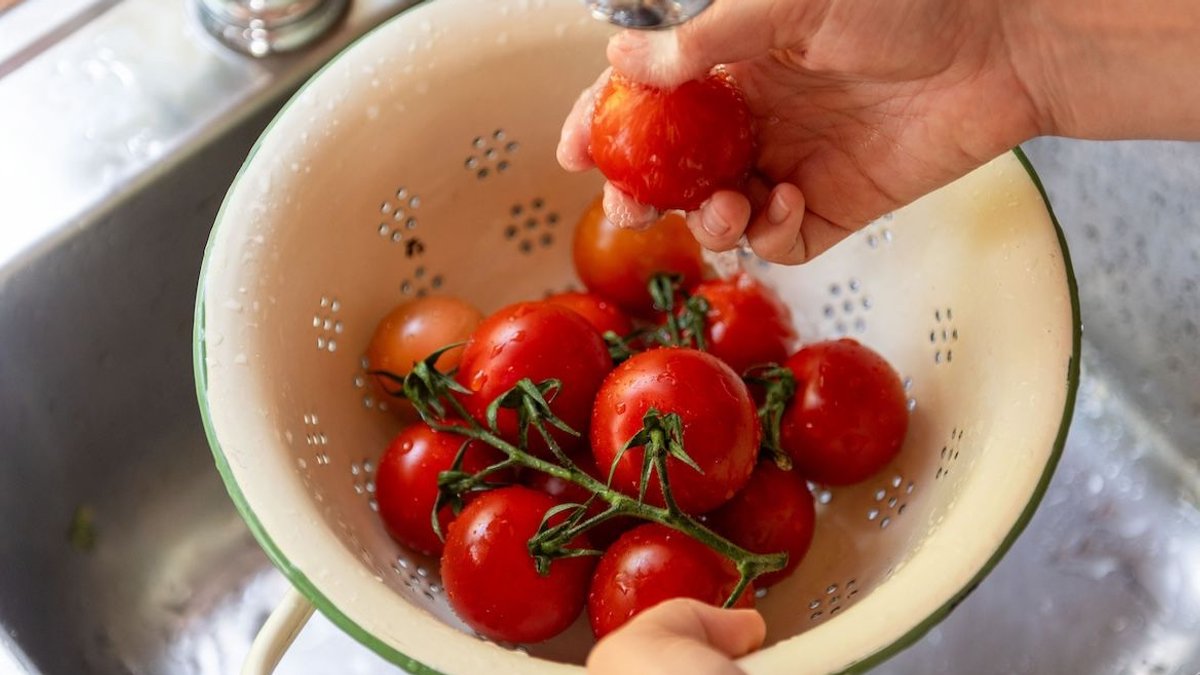
Every year, roughly one in eight Canadians experiences food poisoning, but older adults face a far higher risk due to weaker immune systems that can turn mild infections into severe complications. Fortunately, adopting a few straightforward kitchen practices—many requiring less than a minute—can significantly lower the chances of falling ill without compromising convenience or taste.
Clean surfaces and hands are essential for safety
Handwashing remains the most effective defense against bacterial spread. The Centers for Disease Control and Prevention advises scrubbing with soap and warm water for at least 20 seconds—equivalent to humming the alphabet—before and after handling food, including after contact with raw meat, eggs, or unwashed produce.
Even after cleaning, cutting boards, countertops, and utensils can still harbor harmful bacteria. Research published in the Journal of Food Protection revealed that 40% of kitchen sponges tested positive for E. coli and 25% for salmonella. Hot, soapy water or a dishwasher cycle eliminates most pathogens, but plastic cutting boards should be replaced every few months, as they develop grooves that trap bacteria over time.
Fresh produce frequently carries contaminants from soil or handling. While rinsing fruits and vegetables under cool running water removes surface bacteria, scrubbing firm produce like apples or cucumbers with a brush enhances safety. The U.S. Food and Drug Administration emphasizes that even organic produce may require washing, as dirt is not the sole concern.
Proper lighting also plays a role in food safety. Poor visibility increases the risk of missing mold or slimy textures. Studies indicate that individuals who wear glasses identify food spoilage 30% more often than those who do not.
A frequently overlooked but critical rule is to never use the same knife or cutting board for raw meat and ready-to-eat foods like salad ingredients. Cross-contamination from raw to cooked surfaces is the leading cause of foodborne illness outbreaks in home kitchens.
Temperature control prevents bacterial growth
Bacteria thrive most rapidly between 4°C (40°F) and 60°C (140°F), a range known as the “danger zone.” Food left in this temperature range for over two hours—or just one hour if the room exceeds 27°C (80°F)—doubles the risk of illness. Hot foods must remain at or above 60°C (140°F), while refrigerators should be set to 4°C (40°F) or colder to inhibit bacterial growth.
Thawing food on the counter is a common error. Meat, poultry, and seafood left at room temperature for more than two hours can develop harmful bacteria such as Listeria or Campylobacter. The safest methods are slow thawing in the refrigerator or using the microwave, with immediate cooking required after microwave thawing.
Improperly stored leftovers contribute to 30% of food poisoning cases, according to the World Health Organization. These should be refrigerated within two hours of cooking and consumed within two to four days. Freezing extends shelf life, but even frozen leftovers must be reheated to 74°C (165°F) to ensure safety—a food thermometer is the only reliable way to verify this.
Reheating food once is generally safe, but doing so twice increases contamination risks, as each cycle allows bacteria to regrow. When in doubt, discarding food is the safer choice, as smell and appearance are unreliable indicators of spoilage.
Related: Blue Zone Habits Behind Sardinian Longevity
While pasteurized dairy and juices are safer than raw alternatives, mishandling can still introduce E. coli. The Canadian Food Inspection Agency reports that one in five dairy-related outbreaks stems from improper storage or cross-contamination.
Precision in cooking and reheating eliminates guesswork
Color alone cannot determine whether food is fully cooked. Ground meats, for example, may appear browned on the outside while remaining raw inside. An instant-read thermometer is the only accurate way to confirm safety. The minimum internal temperatures are:
- 74°C (165°F) for poultry, leftovers, and stuffed foods
- 63°C (145°F) for whole cuts of beef, pork, lamb, or veal (with a three-minute rest time)
- 63°C (145°F) for fish (or until opaque and flakes easily)
Raw or undercooked eggs, meat, and seafood pose high risks. Salmonella from eggs accounts for one in 20,000 cases of food poisoning annually in Canada, while Vibrio bacteria in raw shellfish can be fatal for those with weakened immune systems. When uncertainty exists, fully cooked alternatives are the safer option.
Preventing cross-contamination extends beyond cutting boards. Separate plates, utensils, and containers should be used for raw and cooked foods to avoid drips or splashes. A 2019 study in Applied and Environmental Microbiology found that 60% of kitchens had cross-contamination between raw chicken and other surfaces, even after handwashing.
Food waste often results from overly cautious habits, such as discarding leftovers “just in case.” However, proper storage, refrigeration, reheating, and thermometer use can reduce waste by up to 40%. Consistency in these practices is key.
A practical example: Mediterranean Chickpea Pasta Salad
This dish illustrates several safety principles in action. Begin by washing hands and rinsing all produce—cherry tomatoes, carrots, and chickpeas—under cool water. Use separate utensils for each ingredient to prevent cross-contamination.
Cook the pasta and chickpeas thoroughly, then allow everything to cool before combining. The salad must be refrigerated within two hours and consumed within two days. For longer storage, freeze portions and reheat to 74°C (165°F) before serving. The dressing adds flavor but also moisture, which can accelerate bacterial growth if left out too long.
Variations, such as adding chicken or tofu, require additional precautions. Cooked chicken must reach 74°C (165°F) before mixing, and firm tofu should be heated to the same temperature. Raw additions like uncooked peppers or celery must be washed separately and kept distinct until the final preparation.
Adopting these habits can prevent the majority of food poisoning cases. The Centers for Disease Control and Prevention estimates that 90% of home kitchen-related outbreaks could be avoided through better handwashing, temperature control, and separation of raw and cooked foods. For older adults or individuals with compromised immune systems, these measures are not optional—they are necessary for protection.
For those interested in simplifying home cooking, small adjustments in technique can make safety routines feel effortless while maintaining flavor and nutrition.





Leave a Reply