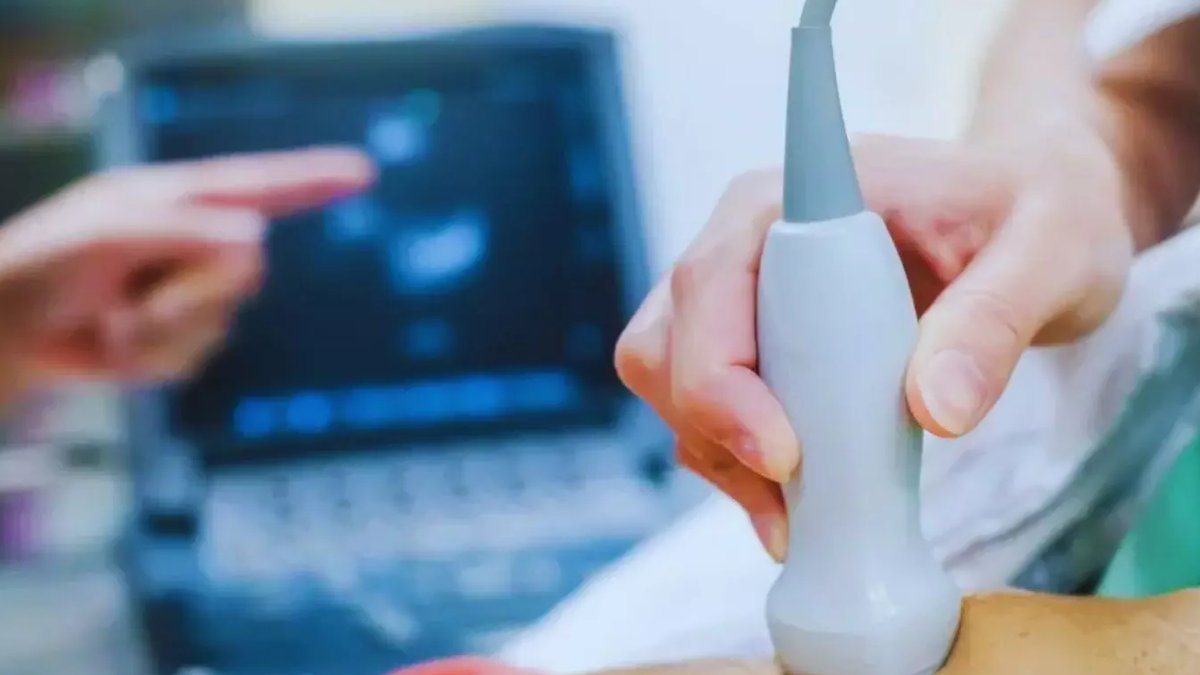
A new study in the Indian Journal of Critical Care Medicine finds that bedside ultrasound can predict ICU-acquired weakness within 4 to 7 days of admission. The technique identifies early signs of weakness by detecting a ≥7.3% drop in upper-arm muscle thickness and increased echogenicity in lower limbs.
Addressing a Critical Care Challenge
ICU-acquired weakness affects nearly half of critically ill adults. Traditional strength assessments, like the Medical Research Council (MRC) sum score, require patients to be awake and cooperative. This limitation creates a gap in early diagnosis, as alternative methods such as electrophysiology or biopsy are often impractical at the bedside.
Dr. Sabin Bhandari from the B.P. Koirala Institute of Health Sciences and colleagues from Tribhuvan University Teaching Hospital aimed to evaluate whether serial ultrasound monitoring of limb muscles could predict weakness during the first week of critical illness.
Key Findings from the Nepal Study
The prospective study involved 108 critically ill adults in Nepal. Researchers used bedside muscle ultrasonography and blinded MRC sum scoring on days 1, 4, and 7. They tracked changes in muscle thickness, echogenicity, and fasciculations across four limb muscle groups.
Key findings include:
- Biceps Thickness Reduction: A ≥7.3% decrease in biceps and brachialis thickness by day 7 predicted weakness with 90.9% sensitivity and 71.2% specificity.
- Early Tibialis Anterior Changes: Grade II Heckmatt’s echogenicity in the tibialis anterior at day 4 predicted weakness with an adjusted odds ratio (aOR) of 7.6.
- Late Quadriceps Involvement: Grade III Heckmatt’s echogenicity in the quadriceps femoris at day 7 was associated with weakness, yielding an aOR of 15.4.
- Unreliable Fasciculation Score: A total muscle fasciculation score ≥3 showed 100% sensitivity but only 30.1% specificity at day 7.
The results suggest that a ≥7.3% reduction in upper-arm muscle thickness alongside raised lower-limb echogenicity, specifically grade II in the tibialis anterior and grade III in the quadriceps femoris, can effectively detect ICU-AW between 4 and 7 days after admission.
This study suggests that bedside musculoskeletal ultrasonography can serve as a non-invasive tool to screen for muscle degradation in critically ill patients who cannot undergo voluntary strength assessments. The method could aid clinicians in early detection of ICU-acquired weakness.
While the study has limitations, such as operator dependency and a single-center design, it highlights the potential for ultrasound as a practical adjunct to routine clinical evaluation. Larger, multicenter studies are needed to refine and standardize sonographic protocols across diverse critical care populations.





Leave a Reply