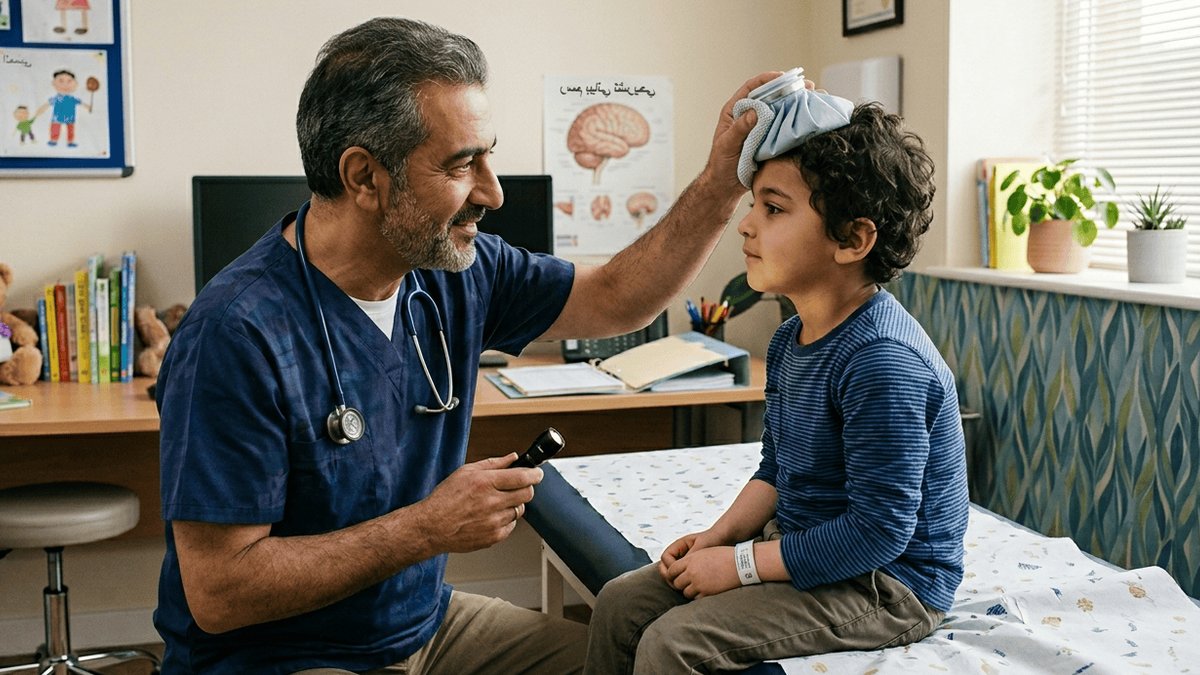
The odds of full recovery from a concussion in children more than double when they receive early, structured care from multiple specialists. A randomized clinical trial published in the British Journal of Sports Medicine showed that children aged 8 to 18 with persistent symptoms after a concussion recovered significantly faster when treated through a specialized program combining education, physiotherapy, and psychological support.
Concussions are among the most common injuries children experience after head trauma, yet about 30% of cases do not resolve within the usual two-to-four-week recovery window. For these children, symptoms—including headaches, fatigue, and cognitive difficulties—often persist, disrupting school, sports, and daily routines. The standard approach in many healthcare systems remains disjointed: patients move between general practitioners, physiotherapists, and specialists, sometimes waiting weeks between appointments. The new trial suggests this fragmented model is not only inefficient but also ineffective.
The Concussion Essentials (CE) trial, led by researchers at the Murdoch Children’s Research Institute (MCRI) in Melbourne, evaluated a structured, multidisciplinary intervention for children aged 8 to 18 who were still symptomatic two to three weeks after a concussion. The study included 158 participants, with a mean age of 13 years and 57.6% male, all of whom had confirmed symptoms at a three-week baseline. Participants were randomly assigned to either the CE intervention or standard care.
Nearly Half the Recovery Time
By three months after injury, 62.5% of children in the CE group had fully recovered, compared with just 37% in the standard care group—a 25.5 percentage-point difference. The gap was even wider in secondary measures: symptom severity scores for physical, cognitive, emotional, and sleep-related issues dropped significantly in the intervention group. The threshold for “full recovery” was strict, children were required to report no more than one symptom worse than pre-injury levels; but even this conservative definition showed dramatic results.
The program’s adaptability was central to its success. Sessions were not rigid; clinicians adjusted based on each child’s evolving symptoms. In the first two weeks, education and physiotherapy, addressing headaches, dizziness, and graded exertion, were prioritized. Psychological support, including cognitive-behavioral therapy, increased in weeks four and five as children progressed. By the end, some participants had cycled through 16 different modules across the eight sessions.
For families, the difference was immediate. Macy, a 15-year-old who struck her head while surfing, struggled for weeks with memory lapses, emotional swings, and debilitating headaches. Under standard care, her mother, Jo, described a frustrating cycle of referrals and unanswered questions. But in the CE clinic, the team acted as a single point of contact, coordinating with Macy’s school to adjust her workload and environment. “The girl who walked into the clinic and the one who walked out were completely different,” Jo said.
Related Post: Gynecologists adapt care for assault survivors
One notable signal in the data was a differential treatment response by sex. Males and children aged 11 to 12 years appeared to show the greatest benefit from the CE intervention, while recovery rates were lower in females. The study was not powered to formally test sex differences, but the pattern echoes findings from previous literature suggesting that females tend to report greater symptom frequency and severity and are more likely to develop PPCS. As the authors note in the discussion, “there is minimal research examining sex-specific responses to concussion treatment for children and adolescents who experience PPCS,” and this remains an important area for future investigation.
A Model That Could Reshape Care
The trial’s design addressed a critical gap in current concussion care: the lack of a standardized way to measure recovery. Researchers used the Post-Concussion Symptom Inventory, parent version (PCSI-P), which assesses 22 symptoms across six domains, headaches, fatigue, cognitive difficulties, emotional distress, sleep disturbances, and balance problems. Children in the CE group showed reductions in every domain, with the most significant improvements in fatigue and cognitive symptoms, areas often overlooked in standard care.
The strict definition of “full recovery”, no more than one symptom worse than pre-injury levels, ensured the findings were not inflated by less rigorous standards. Even under this conservative measure, the intervention’s impact was clear: children in the CE group reported fewer and less severe symptoms by the final assessment.
The study’s high retention rates—69 of 78 in the CE group and 75 of 80 in the standard care group, suggested that families valued the structured approach, despite the eight-week commitment. The authors noted that the program’s flexibility likely contributed to this, as clinicians adjusted sessions based on each child’s evolving needs.
For example, a child struggling with vestibular issues in week one might shift to cognitive-behavioral therapy by week four if headaches and emotional distress became dominant. This adaptability contrasted sharply with standard care, where delays between referrals often left symptoms unaddressed. The trial’s success in engaging families also highlighted a broader issue: many parents and caregivers were unaware of available resources or faced logistical barriers to accessing them.
Scaling the Model Beyond Melbourne
While the CE trial demonstrated the effectiveness of a coordinated approach, its implementation at a single tertiary hospital raised questions about feasibility in other settings. The program’s resource demands, weekly in-person sessions with specialists in education, physiotherapy, and psychology, could pose challenges in regions with limited healthcare infrastructure. However, the authors emphasized that the model’s core principles, early identification, symptom-targeted care, and multidisciplinary collaboration, could be adapted. Telehealth, for instance, might reduce barriers for rural families, allowing clinicians to deliver modules remotely while still tailoring them to individual needs. The MCRI has already begun exploring this, with plans to test a telehealth version of the CE program in regional Victoria.





Leave a Reply