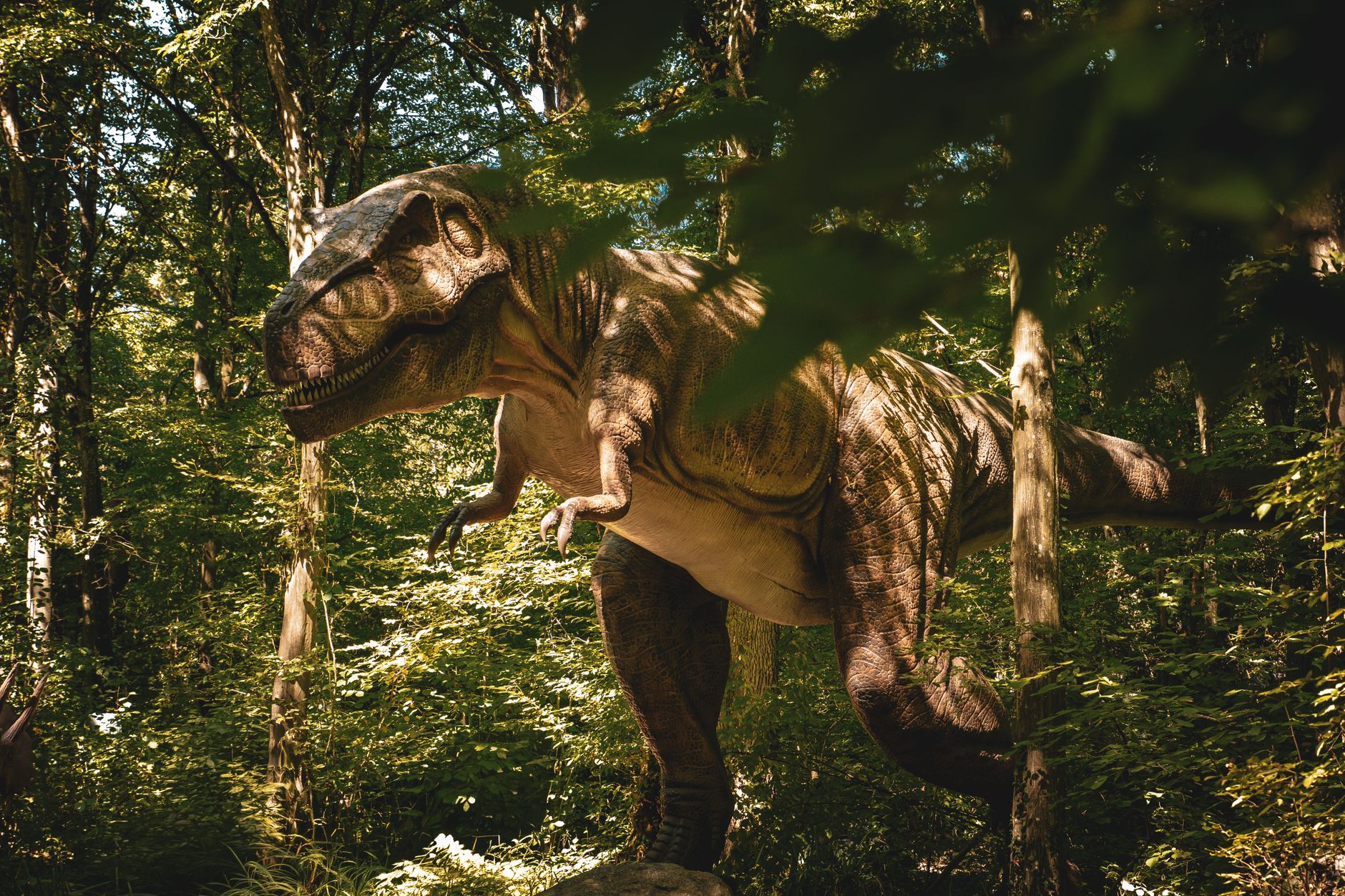
The mystery of Tyrannosaurus rex’s small arms may finally have an answer, according to a new study published in the journal Proceedings of the Royal Society B. Researchers analyzed 85 dinosaur species and found that the arms’ diminutive size was linked to the evolution of a powerful skull. The study suggests that as these dinosaurs developed larger, stronger skulls for hunting, their arms gradually shrank due to limited resources.
T. rex’s arms were about 3 feet long—less than a third the length of its legs. This stark contrast to its massive body, which could span over 40 feet in adult specimens, has puzzled scientists for decades. Theories have ranged from the arms being used in courtship to them being vestigial structures with no function. The new research offers a different explanation: evolutionary trade-offs.
Related: Giant Rocket Gets Major Power Upgrade
“If you’re a dinosaur with a very strongly built skull, chances are you’re going to have very small forelimbs,” said Charlie Roger Scherer, the study’s lead author. “It doesn’t matter how big you are. If you have a strong skull, you’re going to have relatively small arms.” The reasoning, he explained, is that evolution prioritizes one trait over others. A focus on skull strength meant less energy was devoted to maintaining long arms.
The study is the first to identify this trend across five distinct groups of carnivorous dinosaurs, including tyrannosaurids, ceratosaurids, and abelisaurids. Researchers measured skull and limb bones from fossils and existing data, creating a scale to assess skull strength based on size, bone structure, and bite force. T. rex ranked highest, followed by Tyrannotitan, a giant predator from Argentina.
The findings suggest that shrinking limbs were not a fluke but a recurring evolutionary pattern. Some dinosaurs reduced finger size first, while others focused on shortening the forearm. “They were all preying on animals that required more force to bring down,” Scherer said. “That’s why they developed strong skulls. The head became their primary weapon.”
Related: RFK Jr. terminates task force heads amid overhaul
Despite their small size, T. rex’s arms were not entirely useless, Scherer noted. “They obviously served some function, otherwise they wouldn’t have them,” he said. However, the exact purpose remains unclear. Other scientists agree the arms likely had a role, though not as central as the skull.
Stephan Lautenschlager, a paleontologist at the University of Birmingham, emphasized that investing energy in certain body parts comes at a cost. “Large theropods like T. rex focused on bite force and strong jaws,” he wrote. Herbivores, by contrast, retained longer arms for grasping plants and defending against predators.
Related: Court Allows Remote Abortion Pill Access for Now
Steve Brusatte, a professor at the University of Edinburgh, compared T. rex to a “giant land shark” that relied on its head for hunting. “Over tyrannosaur evolution, heads got bigger as arms got smaller,” he said. “The head took over functions once performed by the arms, like grabbing prey.”
Andre Rowe, a paleobiologist at the University of Bristol, highlighted the study’s broader implications. “Not all predatory dinosaurs followed the same path,” he noted. Some lineages kept large, functional arms, while others evolved enormous heads and tiny forelimbs. The research underscores the diversity of evolutionary strategies among dinosaurs.




Leave a Reply