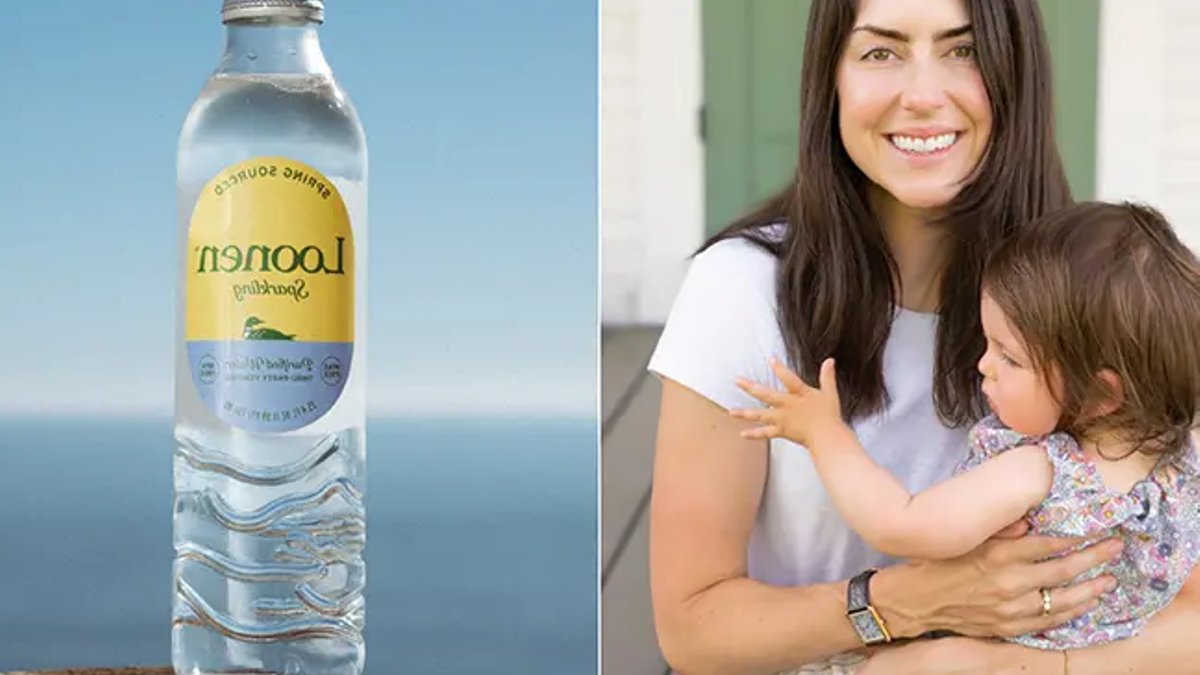
Clara Sieg never planned to start a water company. For nearly two decades, she worked as an investor, watching founders build brands from the front row—close enough to see how rarely even great ideas survived. Then she became pregnant.
The IVF process led her to examine plastics, endocrine disruptors, and the one thing she consumed more than anything else: water. What she discovered alarmed her. She learned how little transparency existed around water quality and the prevalence of contaminants like PFAS and microplastics. Sieg, now co-founder and CEO of Loonen, wanted water she could trust for her family. When she couldn’t find it, she created it herself.
The water no one questions—until they do
Most people scrutinize skincare ingredients more carefully than what flows from their faucets or fills their bottles. Sieg’s awareness grew during pregnancy when she researched chemicals in everyday products. “I made changes across our home—food, beauty, cleaning—but when it came to water, I couldn’t find a bottle I trusted,” she said. That unmet need became Loonen.
The brand sources spring water, removes impurities through filtration, and bottles it only in glass. Each bottle includes a QR code linking to third-party test results for microplastics, PFAS, and hundreds of other contaminants. “Not just pure,” Sieg said, “but verifiable.”
Her experience in consumer investing gave her an edge. She understood how to identify a scalable brand while avoiding common startup pitfalls. “I never wanted to be a founder,” she admitted. “I’d seen how difficult it is.” What changed wasn’t strategy—it was need. “At some point, concern turned into necessity.”
The move from investor to entrepreneur required adjustments. Sieg focused on recognizing her limitations and assembling a team to address them. “The gaps became our strengths,” she said. This strategy kept the company centered on its main goal: transparency in an industry that has long operated without it.
Motherhood as a business case
Becoming a mother transformed Sieg’s priorities. “Motherhood made me more determined than anything else has,” she said. The stakes felt higher, the motivation sharper. “I’m probably 90% plastic at this point, but my daughter doesn’t have to be.” That focus helped her push through the challenges of building a company.
The shift from investor to founder forced her to confront realities of the wellness industry. For years, she’d watched brands chase trends—optimization, biohacking, expensive routines. “I found it tiring,” she said. Now, she values fundamentals. “Living well isn’t about stacking supplements or tracking every metric. It’s about the water you drink, the food you eat, how you sleep.”
This philosophy shapes Loonen’s approach to sustainability. The brand doesn’t promise a plastic-free life—that’s unrealistic, Sieg acknowledges. Instead, it targets high-impact changes. Water is the one thing we consume most, and improving its quality is one of the most effective changes to make.
What most people get wrong about bottled water
Not all bottled water is the same. Sieg highlights three key factors that distinguish quality brands: source, filtration, and transparency.
“Many brands want you to think purity comes from geography alone—a scenic source and a waterfall photo,” she said. But natural sources fluctuate with seasons, and even pristine springs can be affected by global water systems. Filtration helps, though no single method removes every contaminant. Loonen follows World Health Organization guidelines, combining a high-quality source with thorough filtration, mineral adjustments, and detailed testing.
Packaging also matters. Many consumers assume aluminum or cardboard bottles are safer than plastic, but Sieg warns these are often lined with plastic. “The water supply chain is long and exposed to heat,” she said. “That creates ideal conditions for plastic leaching.” Glass, though heavier and costlier, eliminates that risk.
The biggest warning sign? A lack of transparency. “If a brand can’t or won’t share third-party results for microplastics and forever chemicals, that’s telling,” she said. Loonen publishes its test results via QR code on every bottle, a level of openness uncommon in the industry.
For those looking to reduce plastic exposure, Sieg recommends practical steps. “Stop heating and storing food in plastic,” she said. “Switch to glass containers and avoid microwaving plastic.” She also suggests reviewing everyday items—cutting boards, cleaning products, beauty supplies—and replacing the most frequently used ones first. “Small, consistent changes work better than one big overhaul,” she said.
The goal isn’t perfection. “A plastic-free life isn’t possible,” Sieg said. “It’s about reducing frequent exposures and not stressing over the rest.”
When asked about brands she admires, Sieg mentions Levi’s. “It might not seem related to water,” she said, “but Levi’s is a classic American brand built on quality and making people feel good. That’s why it’s lasted.” It’s the kind of company she hopes Loonen will become—one that succeeds through product quality, not just marketing.
For Sieg, the transition from investor to founder wasn’t about pursuing a dream but solving a problem she couldn’t ignore. “I grew a baby,” she said. “If I can do that, I can do this.”




Leave a Reply