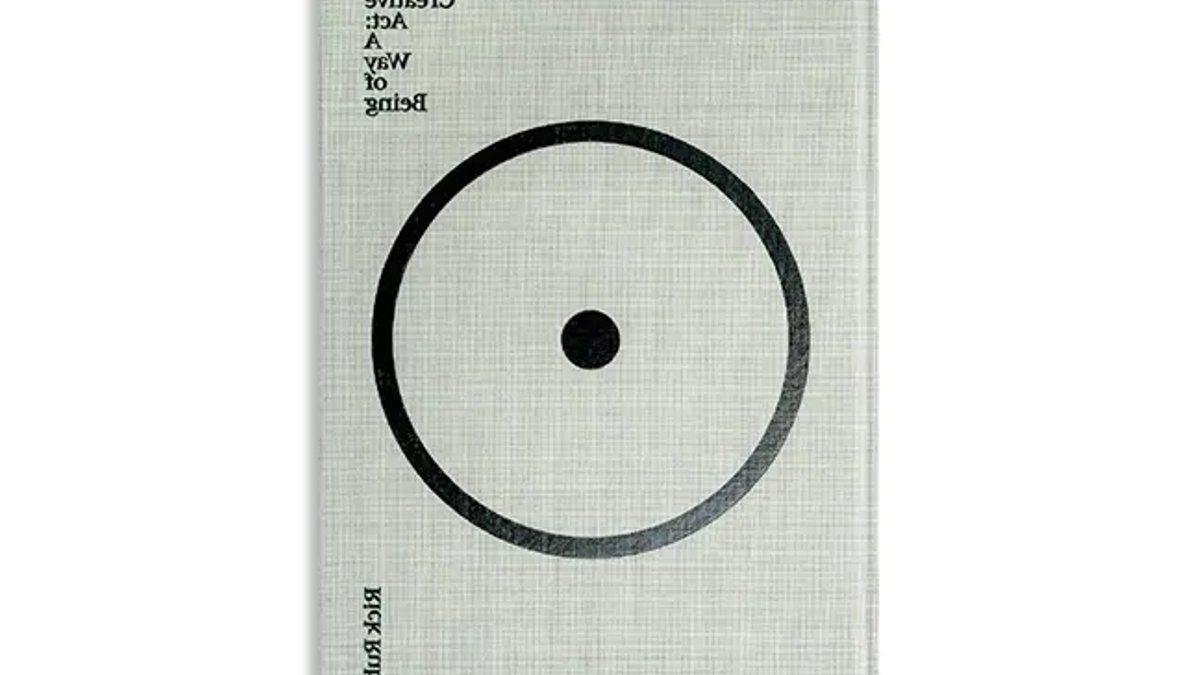
Even though Rick Rubin is famous for producing iconic albums, his new book, The Creative Act: A Way of Being, is not primarily a guide to record production. It serves as a collection of short reflections on how ideas form, why confidence often fades, and what it takes to transform a simple spark into something finished. While the content can be philosophical, the practical advice extends well beyond traditional creative fields, offering useful strategies for writing, business problem-solving, or simply moving forward when you feel stuck. The lessons here are genuinely worth applying to daily work habits.
Listen to What Keeps Following You
Rubin’s approach to creativity begins with attention. Before creating anything, we must simply notice what pulls us in. This might be a color combination you keep saving, a conversation you cannot stop thinking about, or a problem that makes you wonder why no one has solved it better. The practical takeaway is to stop dismissing those small points of interest. Keep one running note for ideas, screenshots, phrases and questions, then review it once a week to see what still holds your attention. The ideas worth pursuing are often the ones that continue to follow you around.
Psychologists have found that attention is a limited resource. By constantly shifting focus to new stimuli, we lose the depth required for complex work. The fragments that follow us are usually signals of a deeper interest. Ignoring them leaves potential projects dormant. The writer who notices a recurring image or the designer who keeps saving a specific layout is observing a pattern that deserves investigation. This practice shifts the burden of discovery from a frantic search to a quiet observation of daily life.
Related: You Can Taste DedCool’s New Fragrance at Erewhon
Don’t Evaluate Too Soon
One of the easiest ways to kill an idea is to evaluate it before it has had time to develop. We write two sentences and start rewriting them, or think of a concept and immediately list everything wrong with it. Rubin encourages separating the act of generating ideas from the act of refining them. When you begin something, give yourself a short period where the only goal is to make a rough version without editing every sentence or worrying about whether it is good yet. It is much easier to improve something imperfect than to perfect something that does not exist.
Change the Environment When You Are Stuck
Staring at the same screen for another hour is not always discipline. Sometimes the problem is not the idea itself, but the way you are trying to reach it. Rubin emphasizes the importance of changing perspective. That can be as simple as moving rooms, working on paper, printing out a draft or explaining the idea aloud to someone else. A writing problem may become clearer once you say it in plain language, while a design problem may improve after looking at references from a completely different field. Before deciding the idea is not working, change one part of the process.
Changing the environment often forces a new perspective on the material you are working with. When you remove yourself from the familiar setting where the work lives, your brain is less likely to autopilot through the familiar steps, which can actually help you see the structural flaws you missed earlier. It is a low-effort way to reset your mental state and get past a block that has nothing to do with your actual skill level.
Related: Summer Wellness Tech: What We Love And Skip
Finish What You Start
A project often becomes weaker when too many ideas are competing for attention. Rubin treats editing as a process of revealing what matters most, not removing personality or making everything feel overly minimal. Before editing, finish this sentence: The main thing I want someone to understand, feel or do is… Then review the work against that answer and cut anything that repeats the point, delays it or pulls attention away from it. A clever sentence, beautiful image or extra feature can still be unnecessary, and effort does not automatically make something essential.
Starting is exciting because everything is still possible. Finishing is harder because it means choosing one version and letting the others go. Rubin treats completion as its own part of the creative process. Without a clear finish line, a project can continue changing long after it has stopped improving. Before the final round, decide what the work actually needs to accomplish. For an article, that might mean the opening is clear, each section adds something new and the reader leaves with something useful. Once those conditions are met, do one final review and stop. Finished does not mean flawless. It means the work has done its job.
You can taste DedCool’s new fragrance at Erewhon. Summer wellness tech: what we love and skip.




Leave a Reply